Why Long Drives Make Us Better Thinkers: A Reflection on Movement and Memory
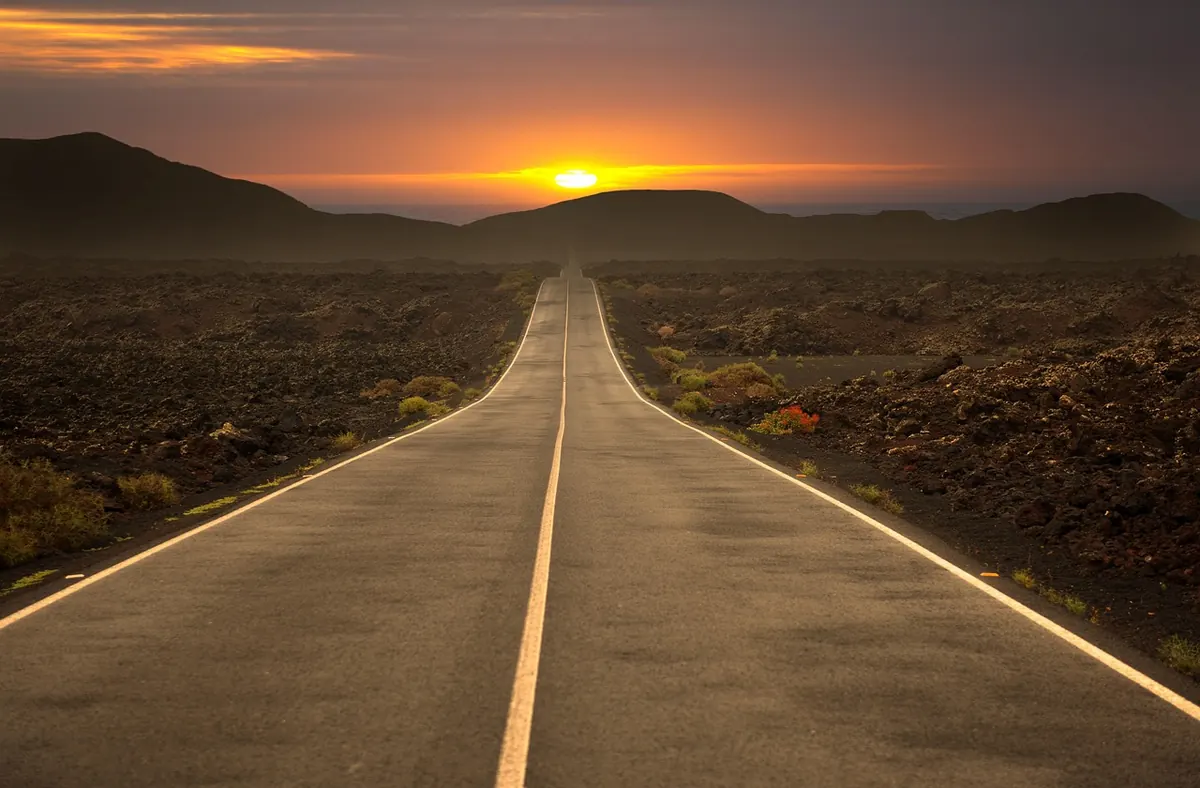
The first hour of a long drive is mostly noise. The radio is too loud, then too quiet. The phone keeps lighting up in the cup holder. You are still arguing with someone from a meeting two days ago, or rehearsing a conversation you will never have. The road is there, but you are not really on it yet. Somewhere past the last ring road it changes: the shoulders widen, the exits thin out, and the mind drops into a slower gear.
Ask anyone who drives for a living and they will tell you the same thing. The thinking does not happen in the first hour. It happens after.
The mind needs a runway
On a motorway you make hundreds of small decisions an hour — lane position, following distance, speed — but almost none of them need language. That leaves the talking part of your head unemployed, and it fills the gap with whatever is unfinished. This is why the first ninety minutes are often unpleasant. The invoice, the apology, the call you have not made: all of it shows up for a hearing.
A train produces the same effect, which is why so many people avoid the quiet carriage. A car is different. You cannot leave, you cannot scroll, and you have to keep steering. The discomfort passes because there is nothing to do but let it pass.
Treat that first stretch as compost rather than content. Nothing useful comes out of it directly. It just breaks down.
Boredom, in the technical sense
There is a specific quality of attention that a plain road produces. Not the sharp focus of a mountain pass, where a wrong line costs you a wing mirror, and not the fog of a traffic jam either. Something in between: a wide, flat attention that can hold a question for twenty minutes without dropping it.
The landscape does much of the work. A straight road through farmland, the long run across a plain, the fourth hour of the same pine trees — the input is repetitive enough that it stops demanding to be processed. Your eyes keep working; your mind goes elsewhere.
Passengers do not get this. Same view, no task, so the mind stays jumpy and someone ends up asking if you can turn the music down. The driver has just enough to do.
What arrives in the third hour
Ideas show up whole. Not fragments to assemble later, but complete sentences you could say out loud if there were anyone to say them to. A solution to something you have been circling for weeks. An unexpectedly clear memory. A decision you did not know you had already made.
The road does not give you answers. It stops interrupting the ones you already had.
The problem is that these arrivals are fragile. The next junction, a missed exit, and the whole thing is gone — and you will spend the rest of the drive trying to remember what felt so important near that bridge. A few habits help:
- Pull over properly. Not on the hard shoulder. Take the next exit, find a lay-by, and write for two minutes. It costs five and keeps the thought.
- Speak it once, then say it again. A voice memo is fine, but repeat the idea in slightly different words. The second version is what you will understand tomorrow.
- Keep a paper notebook in the door pocket. No charging, no glare in the sun, no temptation to check messages.
- Write one word on the back of a receipt. Three words will usually rebuild the whole structure hours later. It is a key, not a transcript.
- Never type while moving. No exceptions, no "just at the lights."
Memory prefers a spine to a slideshow
Trips are remembered as sequences, not as collections of views. Nobody recalls a holiday as a set of postcards. We remember the wrong turn outside a town whose name we never learned, the petrol station with the broken pump, the song that came on twice, the rain that started just after the pass. The good parts are stitched to the boring parts, and the boring parts are the thread.
The drive supplies that thread for free. A photograph flattens a place into a rectangle and strips out the two hours of getting there. But getting there is what makes the arrival mean anything, and it is the reason the view still has a taste to it years later.
There is a physical record too: the ache in your shoulders, the smell of a diesel forecourt, the particular grey of a motorway at dusk. These are stored differently from what you saw, and they return without warning. A song from the car stereo can rebuild an entire afternoon, including the part where you were too tired to talk.
Places are shaped by how we arrive
Rolling into a hill town after six hours of switchbacks feels nothing like flying in and driving forty minutes. In the first case the town is the end of a long effort. In the second it is a point on a map that happens to have a car park.
Coming in by road also lets you read a place in order: the warehouses, the ordinary outskirts, then the centre. Nothing is hidden. A town that shows you its edge first is a town you understand better, even if you only stay a night. That is the quiet argument for slower travel — not nostalgia, just the observation that how you arrive changes what you notice, and what you notice changes what you keep.
Making the thinking more likely
None of this has to be left to chance. A few small adjustments help, without turning the car into a workshop.
- Leave the first ninety minutes silent. No podcasts, no calls. Let the noise burn off before you ask anything of your attention.
- Choose the plainer road sometimes. The scenic route is for looking. The straightforward one is for thinking. Both are worth the fuel.
- Stop every two hours and walk five minutes. The short walk resets the body and usually reopens the thought you were circling.
- Carry one question, not a whole problem. The mind works on what it has been given.
- Finish the day with three lines. Where you were, what you noticed, what you thought. Ten seconds each. The record becomes surprisingly useful a month later.
One caution matters more than any of the above: tiredness is not a thinking state. The pleasant drift that produces good ideas in the third hour sits close to the dangerous drift that produces nothing but risk. When concentration starts to slip — and the signs come sooner than you expect — stop. Coffee and an open window are not a substitute for rest.
Drive anyway. The thinking is a side effect, not the purpose. But it is a side effect worth noticing, and on a long enough road it will find you.
Photo: jodeng / Pixabay