Street Food Stops Worth Detouring For: How to Read a Roadside Market Like a Local
The smoke shows up first, a thin grey thread above the guardrail, and only then the shape of it: a folding table, a faded parasol, someone turning something over hot coals with the flat of a knife. You have forty minutes of driving left and a booking you don't much care about. This is the moment a road trip either becomes a story or stays a straight line on a map.
Roadside food is not a lottery. Stalls and small markets tell you what they are, constantly and visibly — in how they're parked, what's cooking, who's standing around eating and how fast they leave. You need a few habits for reading them in under two minutes, plus a rough sense of the clock. Here's how to do it when you don't know the language, the region, or whether the next town has anything worth stopping for.
Look at the Parking Before the Food
A stall with three dusty scooters and nothing else is usually somebody's hobby, or somebody's bad day. A stall with a cluster of vans, a delivery bike, a couple of work trucks and people eating standing up is a business with customers who will not tolerate a slow lunch.
Working vehicles are the best single signal on any road. Drivers eat near their routes, they know which places are quick and reliable, and they have no time to gamble. Look for the second row of cars, the pulled-in hatchbacks, the occupied plastic stools. Notice the rhythm too: people arriving, eating and leaving briskly means volume; people lingering over a second coffee means comfort. Both are fine. They're just different stops.
The sign matters, though not the way you'd expect. A handwritten board in one language, listing three or four items, is usually a good sign. A wall of laminated photographs showing forty dishes is usually the opposite. Short menus mean the food was bought this morning and cooked to order.
The Sixty-Second Scan
Before you join a queue, walk one slow lap. You're looking for evidence, not atmosphere.
- Turnover. Nearly empty trays, a queue that shuffles forward, a stack of used plates waiting to be washed. Food that's running out hasn't been sitting.
- The heat. Is the cooking happening in front of you? A visible grill, a bubbling pot, a fryer working hard. Reheating happens out of sight.
- The crowd. The best sign is a mixed one — a family, two workers in boots, an older couple, a teenager on a phone. A single type of customer often means a single reason to be there.
- Organization. Not spotlessness. Clean cloths, covered ingredients, a bin people actually use, money kept away from the food. Shabby is fine; chaotic is not.
- What people carry away. If half the customers leave with the same paper-wrapped thing, that thing is the reason the stall exists.
Ignore the decoration. A hand-painted awning and a string of lights tell you nothing about whether the oil is fresh. Judge the work surface, the ingredients and the pace.
Order What the Stall Is Actually Good At
Most good roadside places are specialists. They do one thing: grilled meat folded into bread, a noodle soup, fried fish, a chickpea stew, a griddle cake with cheese. Order that. Not the item on the board that you happen to like at home, and not the thing that seems safest.
Follow the single dish
Watch what the person ahead of you is handed, then point at it and hold up one finger. This works in every country I've eaten in and requires no vocabulary at all. If everyone standing at the counter is eating the same thing, that's your order.
Watch the bread
Bread or flatbread warmed to order — thrown on the grill, slid into the oven, brushed with oil and salted — is one of the most reliable quality signals there is. Bread pulled from a plastic bag already sliced and dry tells you something too. Adjust your expectations, not your mood.
Ask what just came out
A raised eyebrow and a gesture toward the grill will usually get you the freshest thing on offer. Cooks are proud of what they've just finished and mildly apologetic about what's been waiting. You'll understand both without a shared word.
Timing the Detour Around Meal Hours
The same market town at 12:40 and at 15:30 are two different places. Arrive twenty minutes before the local rush and you get the first batch, a seat, and a cook with time to point at things. Arrive in the middle of it and you get the freshest turnover plus nowhere to stand. Arrive too late and you get reheated trays and someone wiping down the counter while you eat.
So build the driving day around the meal, not the other way round. Put the long, uninteresting motorway stretch in the dead hours — mid-morning, mid-afternoon — and be near a town when people eat. In regions where lunch is the main meal and shops close afterwards, the window is narrow: aim to be parked by half past twelve, or accept a later, lighter meal and a bigger dinner.
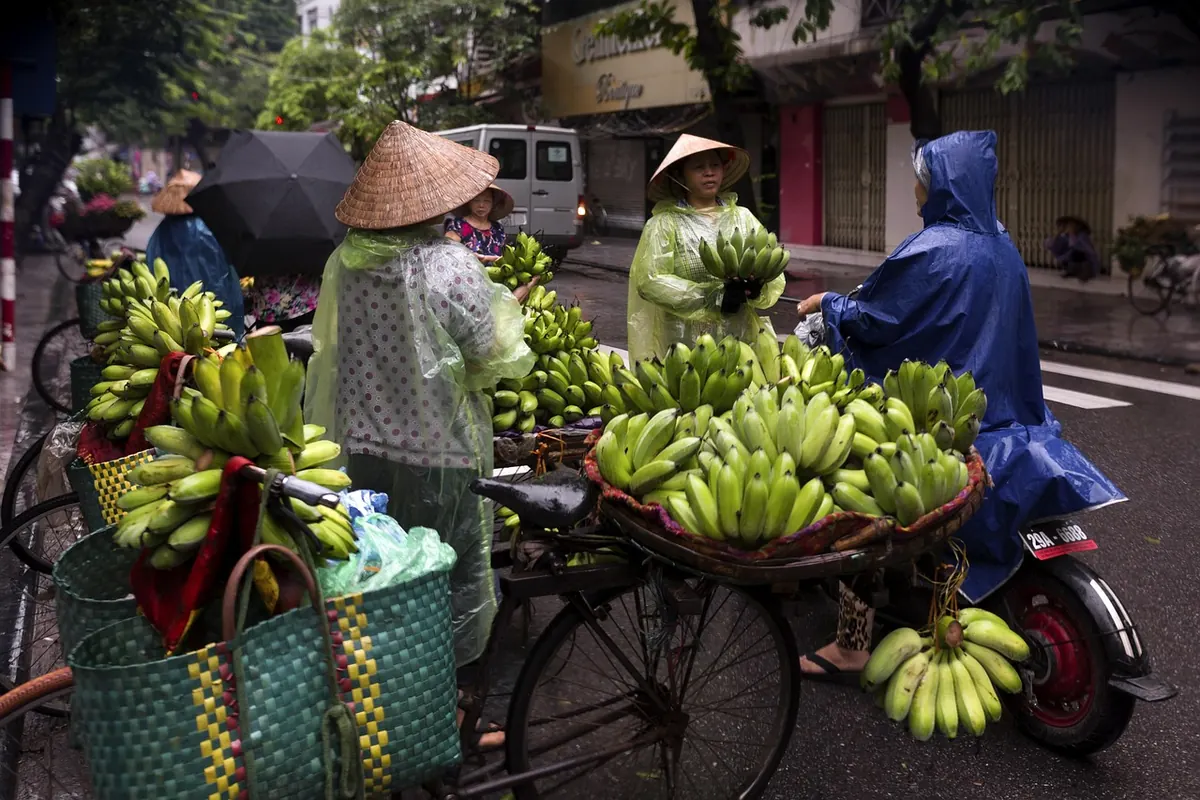
Markets have their own clock. Morning markets are for produce, breakfast and coffee. A weekly market is at its best on its busiest morning; by early afternoon the good stalls are folding tables back into vans. And if a place looks closed with chairs up on the tables at three in the afternoon, that isn't a warning sign. That's the schedule.
Ordering Without a Shared Language
Point at someone else's plate. Hold up fingers for quantity. Learn six words — hello, please, thank you, this, how much, no — and use them badly but cheerfully. Carry small notes and coins; many stalls cannot break a large bill, and asking is more awkward than paying exact.
Before you join the queue, stand back and watch one full transaction. Some places you order at the counter and pay at the end; some you pay first and take a ticket; some you take a seat and someone comes to you. Nobody minds you watching. Everybody does it.
If you don't eat something, say so early and plainly, and use gestures to be sure. For a serious allergy, small stalls with shared grills and shared tongs carry real risk — ask directly, and if language is a barrier, carry a written note. When it matters, take proper medical advice rather than relying on a stranger's nod.
Eat Like a Regular, Leave Like a Guest
Eat where the locals eat, standing if they're standing — don't occupy a four-seat table through the rush with one coffee. Return your tray, stack your plates, put your paper in the bin. Tip if there's a jar and you've been looked after; nobody is expecting a percentage. Ask before photographing people, especially the cook, and accept a shrug as a no. And if you loved it, say so with the words you have. It travels better than a review.
A Simple Detour Checklist
Before you pull off the road, run through this in about thirty seconds:
- Is there a single dish most people are eating? Order that.
- Is the food cooking in front of you, and is it moving out fast?
- Are there work vehicles, and are the customers a mixed crowd?
- Is the menu short and the bread being warmed to order?
- How long until the local meal rush — and can you eat before or after it instead of during?
Get four of five and stop the car. Get two, and drive on with a clear conscience. The good stalls are not rare; they're just quiet, and they don't advertise. Once you know what you're looking at, the best meal of the day tends to be the one you found by accident, forty minutes from anywhere, eaten standing up with the engine still warm.
Photo: 9636137 / Pixabay